Planning
Which Camino route should you choose?
Seven Camino routes compared on length, stages, terrain and crowds. See which route suits your first Camino and how many pilgrims walked each in 2025.
If this is your first Camino and you are unsure, choose the Camino Francés. It is the route with the most albergues and services, it is the one most often recommended to first-time pilgrims, and 46 per cent of all pilgrims walked it in 2025.
With only one to two weeks, the Camino Portugués from Porto or Tui or the short Camino Inglés fits better. For mountains and fewer people, look at the Camino Primitivo or the Camino del Norte. The Vía de la Plata is for those who want to walk far in peace and quiet, and the Camino Finisterre is an extension out to the sea after Santiago.
The seven routes in figures
| Route | Start | Length | Stages | Pilgrims 2025 | Share |
|---|---|---|---|---|---|
| Camino Francés | Saint-Jean-Pied-de-Port | approx. 773 km | 31 to 33 | approx. 242,000 | 46% |
| Camino Portugués, central | Porto | approx. 240 km | 11 | approx. 101,000 | 19% |
| Camino Portugués, coastal | Porto | approx. 280 km | 13 | approx. 90,000 | 17% |
| Camino Inglés | Ferrol | approx. 122 km | 5 | approx. 30,000 | 6% |
| Camino Primitivo | Oviedo | approx. 323 km | 14 | approx. 28,000 | 5% |
| Camino del Norte | Irún | approx. 820 km | 35 | approx. 21,000 | 4% |
| Vía de la Plata | Seville | approx. 963 km | 38 | approx. 9,000 | 2% |
| Camino Finisterre | Santiago | approx. 90 km | 4 | not counted separately |
Lengths and stages are the figures given by Correos and vary a little between sources and variants. One stage equals one walking day, so add rest days on top. The pilgrim figures are those who received a Compostela at the pilgrim office in Santiago in 2025, rounded. The total was about 531,000.
Route by route
Camino Francés
The Camino Francés runs from Saint-Jean-Pied-de-Port over the Pyrenees and across northern Spain. It has the most infrastructure and the most places to stay, so days can be made short or long as needed. The first stage is one of the hardest, with more than 1,200 metres of ascent to the Lepoeder pass at 1,432 metres. The drawback is crowding, especially on the last 100 km from Sarria, where around 31 per cent of all pilgrims started in 2025.
Camino Portugués, central and coastal
The Camino Portugués is the second most walked route. Correos describes it as low to medium in difficulty, with regular terrain and mostly asphalt and dirt tracks. The central route runs inland and is demanding in places. The coastal route follows the Atlantic on promenades, wooden walkways and dirt roads and is more relaxed. It grew by 20 per cent in 2025. From Lisbon the route is about 600 km in 25 stages, and from Tui there are 6 stages to Santiago.
Camino del Norte
The Camino del Norte follows Spain’s north coast from Irún through the Basque Country, Cantabria and Asturias. The hardest stages are in the Basque Country. In Cantabria the terrain is easier, but much of the way is on asphalt, and the final stages in Galicia are far from the sea. The route alternates between built-up tourist areas and stretches of great natural beauty. Choose it if you have five weeks and want the sea and fewer pilgrims than on the Francés.
Camino Primitivo
The Camino Primitivo runs from Oviedo through the mountains of Asturias and joins the Camino Francés in Melide. Correos calls it one of the hardest Camino routes, with climbs and descents all the way and muddy paths. Gronze describes the number of pilgrims as still moderate, but the route grew by 14 per cent in 2025. It suits you if you are fit and have two weeks.
Camino Inglés
The Camino Inglés from Ferrol is short, pleasant and well marked, and it is getting busier. At about 122 km it is just long enough for a Compostela, and it fits into a week’s holiday. The variant from A Coruña is about 72 km in 3 stages.
Vía de la Plata
The Vía de la Plata from Seville is the longest of the routes. Distances between towns are enormous, services are fewer and summer temperatures are extreme. Correos advises against July, August and September and recommends March, April, May and October. It is a route for the experienced walker looking for quiet.
Camino Finisterre
The Camino Finisterre starts in Santiago and runs to Fisterra in about 90 km and 4 stages, or to Muxía in 3 stages. You can collect the Fisterrana and Muxiana certificates, but not a Compostela, unless you walk the opposite way into Santiago and cover at least 100 km. The route works well as a finale after another Camino.
Choose by the time you have
- About one week: the Camino Inglés from Ferrol, the Camino Portugués from Tui or the last 100 km from Sarria.
- About two weeks: the Camino Portugués from Porto or the Camino Primitivo.
- Five weeks: the whole Camino Francés or the Camino del Norte.
- Six weeks or more: the Vía de la Plata.
The season matters for the choice too. See when to walk the Camino before you decide.
The 100 km rule
For a Compostela you have to walk at least 100 continuous kilometres on the same route, including the final stage into the cathedral. By bicycle the requirement is 200 km. That is why many people start in Sarria, Tui or Ferrol, which are a little over 100 km from Santiago.
Frequently asked questions
Which Camino route is best for beginners?
Which Camino route is the shortest?
Which route has the fewest pilgrims?
How far do you have to walk to get a Compostela?
What is the difference between the central and coastal Camino Portugués?
Camino King
The walker who never stopped
Michael walked his first Camino in 2016 and has kept going ever since. He writes about the routes, the gear and everything that makes a long walking day good. If it is here, it has been walked, worn or weighed.
Read next
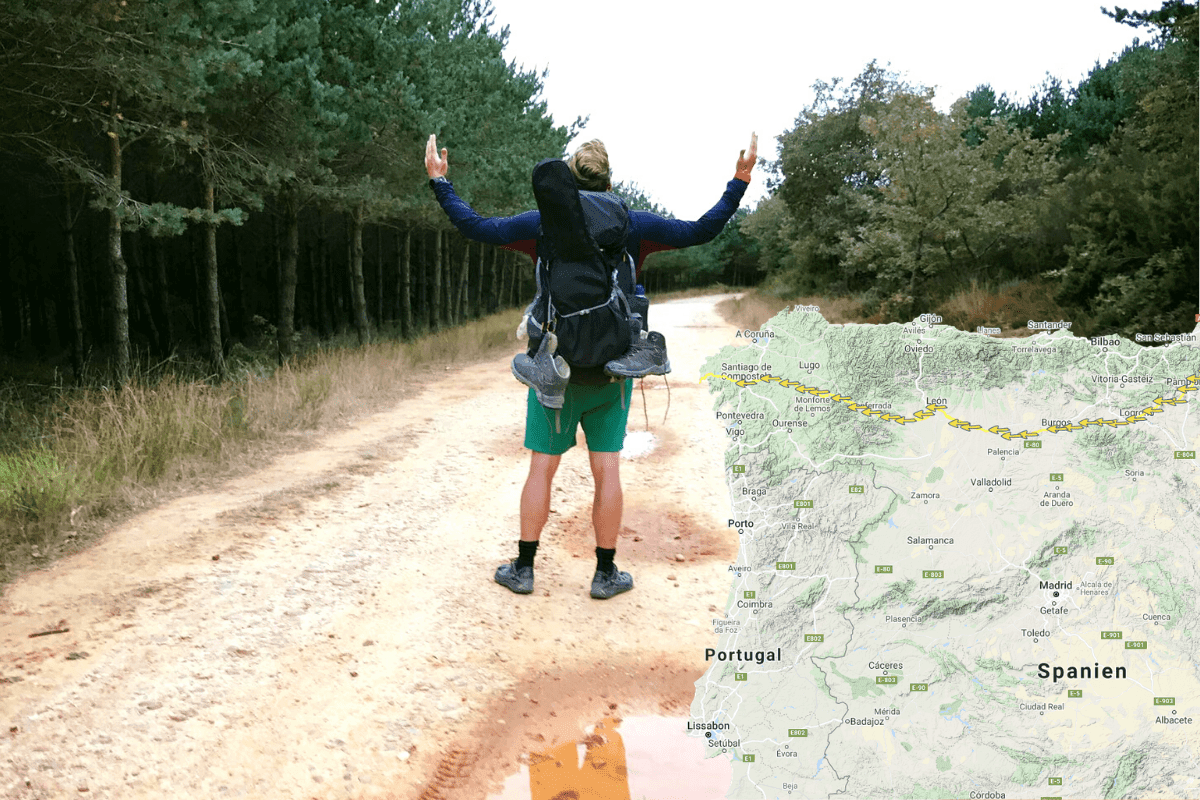 Planning How long is the Camino? Length, stages and time The Camino Francés is around 770-775 km and takes 25-35 days to walk. See the stages, their distances and what the terrain is really like.
 Routes What is the Camino de Santiago? All the routes explained The Camino de Santiago is not one trail but a whole network of pilgrim routes. Here is how it works and how to choose the right Camino for you.