Camino King

The ways to Santiago

Camino Portugués

Gentler climbs, coastal variants and a milder introduction to the Camino.
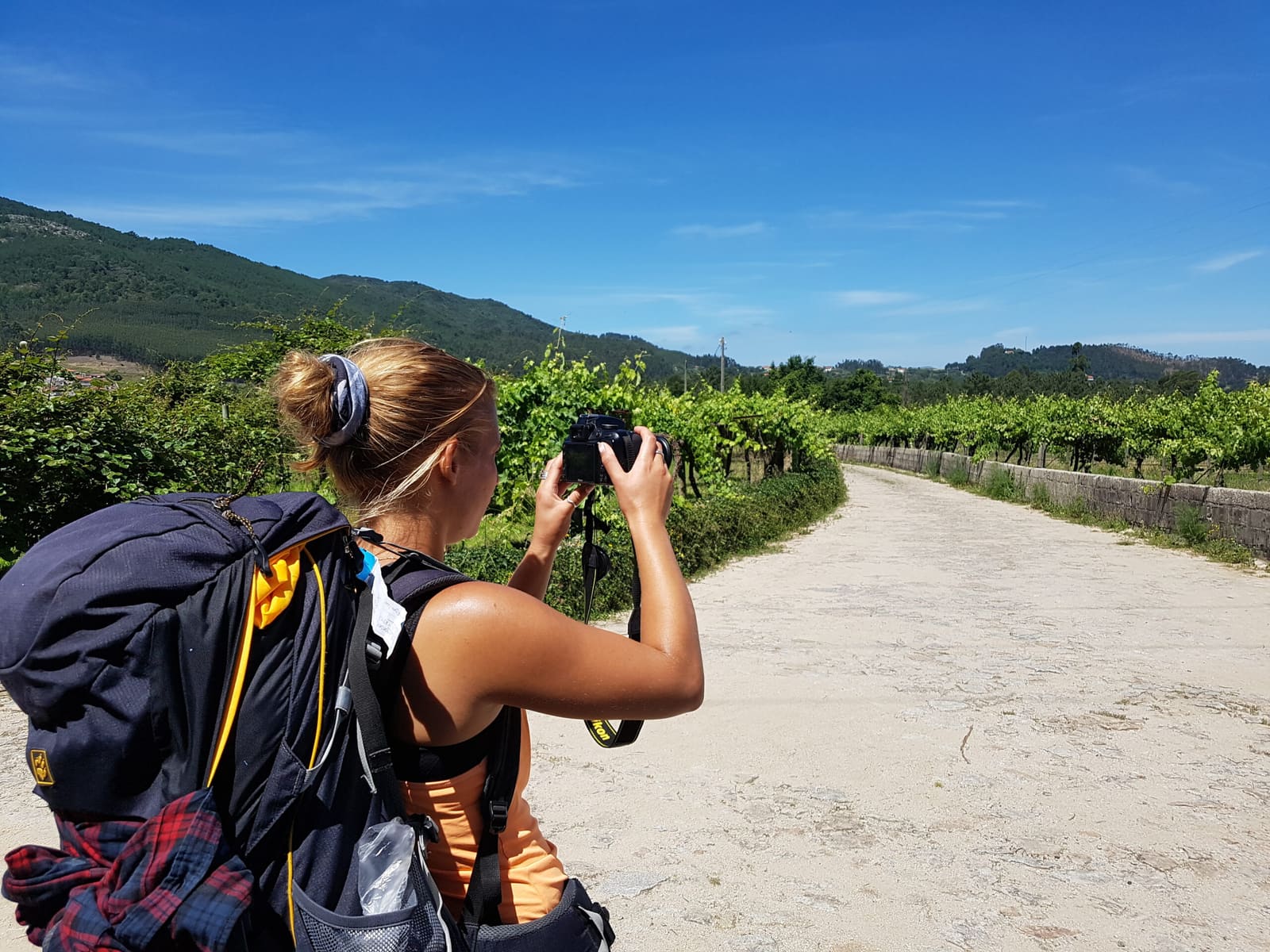
Photo from Camino Portugués coming soon Walking the Camino Portugués
Distance
616 km
Time
25 to 28 days from Lisbon, 10 to 12 from Porto
Stages
About 25 stages from Lisbon
Difficulty
Easy

Starts in Lisbon or Porto, Portugal

The Portugués is the second most walked Camino and the kindest on the legs. Most pilgrims start in Porto and follow either the central route through Barcelos and Ponte de Lima or the coastal variant with the Atlantic for company.

Expect cobbled lanes, vineyards, river crossings and a steady rhythm of towns. It is an excellent first Camino, and the start in Porto fits neatly into a two-week holiday.

History and character

We walked the Camino Portugués the summer after our first Camino Francés, and we fell for it straight away. It is the second most walked route in the whole pilgrim network, and more than one in five pilgrims who reach Santiago have walked this one.

Most people start in Porto, as we did, and from here you can choose between the central route in through Barcelos and Ponte de Lima or the coastal route along the Atlantic. We took the central route, but if we had wanted to swim and jump into the sea along the way, the coast would have been the obvious choice. If you start all the way down in Lisbon, the trip becomes around 610 kilometres.

Portugal made a strong impression on us. The country is known for beautiful beaches and a cuisine full of fish and seafood, and the culture carries the mark of the idyllic landscape, where it is hard to be in a bad mood. When we walked the route, we also found that almost everything was cheaper than in Spain, from hostels to food and drink.

Highlights along the way

1

Porto

The start town on the Douro river with port wine cellars, azulejo tiles and an atmospheric old town. A gem worth an extra day before you set off.

2

The coastal route and the Atlantic

Boardwalks and beach paths along the sea past fishing villages north of Porto. Sea breeze, waves and plenty of chances to jump in the water along the way.

3

Ponte de Lima

One of Portugal's oldest towns with a long medieval bridge over the Lima river. A classic stop on the central route.

4

Valença and Tui

The fortified border town of Valença and the crossing of the Minho river into Spain at the cathedral town of Tui. Here the language and the mood shift.

5

Redondela and the Galician rías

Into Galicia with green valleys, vines on granite posts and the beautiful estuaries. The last days feel lush and homely.

Terrain and difficulty

The Portugués is the kindest on the legs of the big routes. The stages are generally a little shorter than on the Francés, and most days roll gently through vineyards, cobbled towns and along rivers. If you choose the coastal route, you get the sea breeze and flatter stretches too. One thing to be aware of. There are not quite as many hostels as on the French Route, so in high season it pays to arrive early or book ahead. On the other hand, it is easy to combine two short days into one if you want to walk further. It is well signposted, and only inside the towns, especially if you set out in the dark, can it be a little hard to find your way.

Who the route suits

The Portugués is an excellent first Camino. It is more manageable than the Francés, and many people take a little over a week's holiday on the route from Porto just to find out whether walking is for them. It is also easier and cheaper to fly to Porto, and you can often fit the whole thing into a two-week holiday. If you like the idea of alternating between charming towns, good food and a dip in the sea, this is your route.

Getting to the start

Porto is easy to reach with direct flights or a single stopover from Denmark, and that is one of the reasons so many people start right here. From the airport the metro runs into the centre close to the cathedral, where the route begins. If you start in Lisbon, you fly there and take the train or a flight onward to Porto. Remember to collect your pilgrim passport at the cathedral, so you can gather stamps from the first stage.

The route on the map

When to go

Spring and early autumn are ideal. Summer works too, the coastal variant catches the sea breeze, but book beds well ahead in July and August.

Frequently asked questions about the Camino Portugués

How long is the Camino Portugués, and how long does it take?
From Lisbon it is around 616 kilometres and takes 25 to 28 days. Most people start in Porto, which is 10 to 12 days away.
Where does it start and end?
It starts in Lisbon or Porto in Portugal and ends in Santiago. From Porto you can choose the central route or the coastal route along the Atlantic.
Is the Camino Portugués suitable for beginners?
Yes, it is the kindest on the legs of the big routes, with slightly shorter stages and gentle climbs, and the start in Porto fits neatly into a two-week holiday.
When is the best time of year?
Spring and early autumn are ideal. Summer works too, especially the coastal variant, but book beds well ahead in July and August.
Roughly how much does it cost?
Portugal is often a little cheaper than Spain. Count on around 30 to 40 euros a day for hostels and pilgrim menus.
Central route or coastal route, which should I choose?
The central route goes through historic towns like Barcelos and Ponte de Lima, while the coastal route gives you the sea breeze and a chance to swim. Both lead to Santiago.
Continue to the end of the world Camino Finisterre Many walk on from Santiago to Cape Finisterre, where the Romans believed the world ended, and watch the sun sink into the Atlantic.

The other ways to Santiago

Camino Francés 771 km Camino del Norte 824 km Camino Primitivo 313 km Camino Inglés 116 km Vía de la Plata 960 km