The ways to Santiago
Camino Primitivo
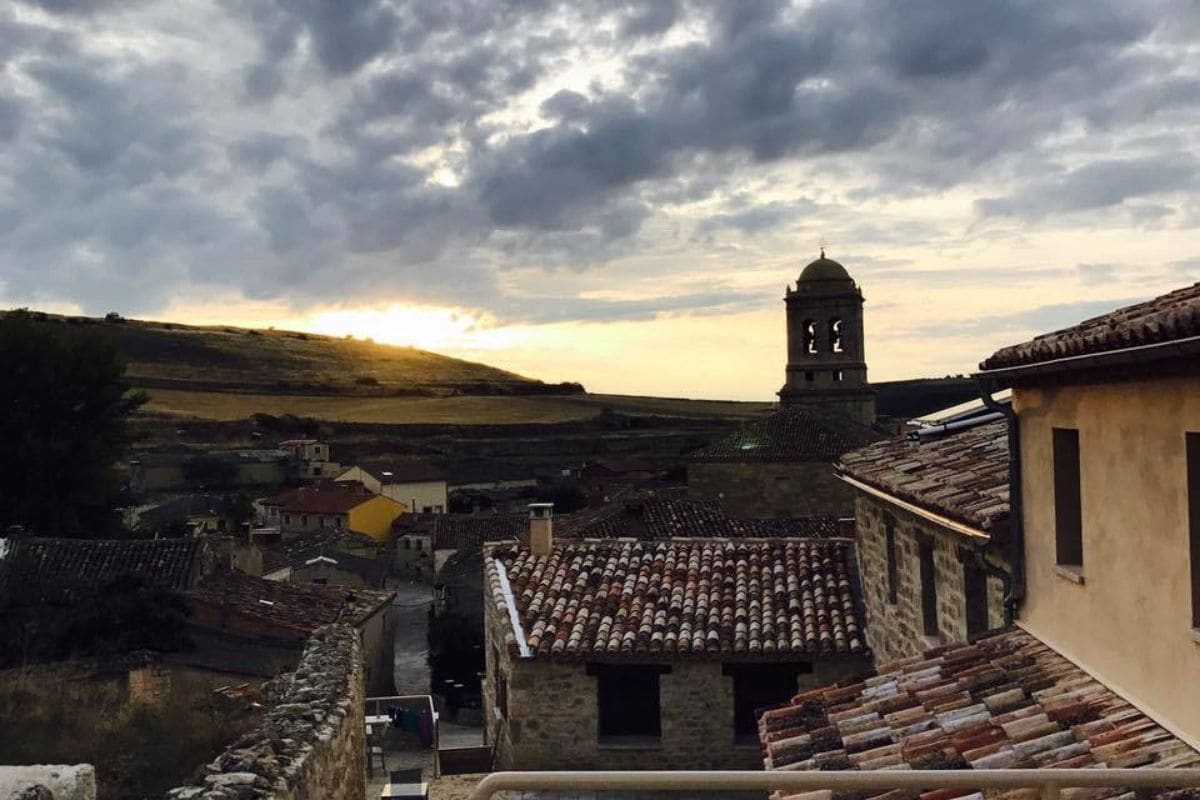
The original route. Mountainous, wild and deeply rewarding.
- Distance
- 313 km
- Time
- 12 to 14 days
- Stages
- 13 to 14 stages
- Difficulty
- Challenging
Starts in Oviedo, Spain
The ways to Santiago
The original route. Mountainous, wild and deeply rewarding.
Starts in Oviedo, Spain
The Primitivo is the oldest Camino, the road King Alfonso II walked from Oviedo in the ninth century. It cuts through the mountains of Asturias and Galicia, meets the Francés at Melide and shares the last days in towards Santiago.
It is short, steep and spectacular. There are fewer services and bigger climbs than on the Francés, and that is precisely why experienced walkers have it as their favourite.
The Camino Primitivo is also called the Original Way, because it is the oldest of all the routes. It winds through the heart of northern Spain from Oviedo to Santiago, the road King Alfonso II already walked in the ninth century, and it appeals to adventurous souls who are looking for a more challenging and less travelled way.
It is a route where you explore both the beautiful landscapes of northern Spain and the depths of your own inner landscape. Walking here is as much a mental as a physical challenge, and many people use it for immersion, quiet and reflection. In return it rewards you with an authentic pilgrim experience far from the crowds.
You can easily combine the Primitivo with both the Francés and the del Norte, since all three lie in northern Spain and lead towards the same goal. The route meets the Francés at Melide and shares the last days in towards Santiago.
An elegant start town with an old, magnificent cathedral and pre-Romanesque churches on the mountainside. The very place where the pilgrim tradition began.
Green valleys and mountain passes past small stops like Grado, Salas, Tineo and Pola de Allande. Silence and wide open spaces from early morning.
The high route along the ridge past the ruins of medieval pilgrim hospitals. The route's most dramatic and photographed stage.
The descent to the great reservoir is one of the route's big moments, with water and mountains as far as the eye can see.
The town with a completely preserved Roman wall that you can walk all the way around, and an old Roman bridge. World Heritage.
Here the Primitivo joins the great route, and Melide is famous for its pulpo, octopus the Galician way.
The Primitivo is considered the hardest Camino. It is short in kilometres, but almost a constant run of mountain passes, forest paths and country roads, with several days of around 25 to 27 kilometres in demanding terrain. The high point for many is the Hospitales route across the mountains, spectacular in clear weather and exposed in mist and rain, where the low route's villages are the safe alternative. If you are in good shape and used to walking, you do not necessarily have to train much beforehand. But we ourselves are used neither to carrying extra weight nor to mountain terrain in Denmark, so a little fitness and strength in the legs and back make the long days nicer. There are fewer services than on the Francés, so plan your stages and your water accordingly.
The Primitivo is the experienced pilgrim's favourite. It suits you if you like mountains and hard terrain, and are happy to swap comfort and company for wildness and silence. If you travel on a budget and sleep in hostels, a day can cost around 20 to 30 euros, and along the way you can even save a little on the food budget. We found chestnuts by the road, for example. If you want to test your physical limits and at the same time make room for reflection, this is the route.
The start town of Oviedo is the capital of Asturias and is reached by flying to Asturias airport or by train and bus from Madrid, Bilbao or León. From Denmark the simplest way often goes via Madrid or Bilbao and onward on the Spanish rail network. Take a day in Oviedo first, see the old cathedral, collect your pilgrim passport, and walk out of the city on the original way.
Late May to early October. The mountain stages are genuinely exposed, so if you walk outside high season, keep an eye on the forecast, especially around the Hospitales variant.