The end of the world
Camino Finisterre
The continuation to the end of the world, where pilgrims of old walked out to the sea.
- Distance
- 89 km
- Time
- 3 to 4 days
- Stages
- 3 to 4 stages
- Difficulty
- Moderate
Starts in Santiago de Compostela, Spain
The end of the world
The continuation to the end of the world, where pilgrims of old walked out to the sea.
Starts in Santiago de Compostela, Spain
Finisterre is the one Camino that turns it all around. It starts in Santiago instead of ending there, and it leads west through the green Galician hinterland out to the Atlantic at Cape Finisterre, the place the Romans called the end of the world.
Many pilgrims carry on here once they have reached the cathedral, to give the journey a real ending by the sea. The 89 kilometres to Finisterre can be extended to about 116 if you also take the beautiful variant out to Muxía.
The Camino Finisterre is the one route that turns it all around. It differs from all the others by starting in Santiago de Compostela instead of ending there. It was created as an extension, a chance to walk on out to the Galician coast, which the Romans called the end of the world, Finis Terrae.
Many people are bitten by the Camino while they walk it, and when they have finally reached the goal at the cathedral, they are not ready to stop. So they carry on the last barely 90 kilometres out to Cape Finisterre. At the lighthouse the pilgrims stand and watch the sun go down into the Atlantic, and traditionally you mark the end of the journey with a small ritual, symbolically burning a piece of clothing or your worn-out boots.
We have walked out to Finisterre several times, but still miss the pleasure of the last stage to Muxía, where you are said to experience an even more authentic part of Galicia. If you add that variant, the route comes to around 116 kilometres in all. It is a quiet and reflective epilogue to a long walk.
Walking out of the cathedral city westward, this time with the sea as the goal, gives the trip a very particular, reversed feeling.
An idyllic medieval bridge over the Tambre river, one of the most beautiful and photographed places on the route.
After days in the hinterland the sea appears ahead at Cee and Corcubión. A big moment when the great blue finally lies there.
The route's goal at the end of the world. Here pilgrims watch the sun go down into the sea and mark the journey's end at kilometre stone zero.
The beautiful extension to the sanctuary at the wind-blown cliffs. Together with Finisterre the trip comes to around 116 kilometres.
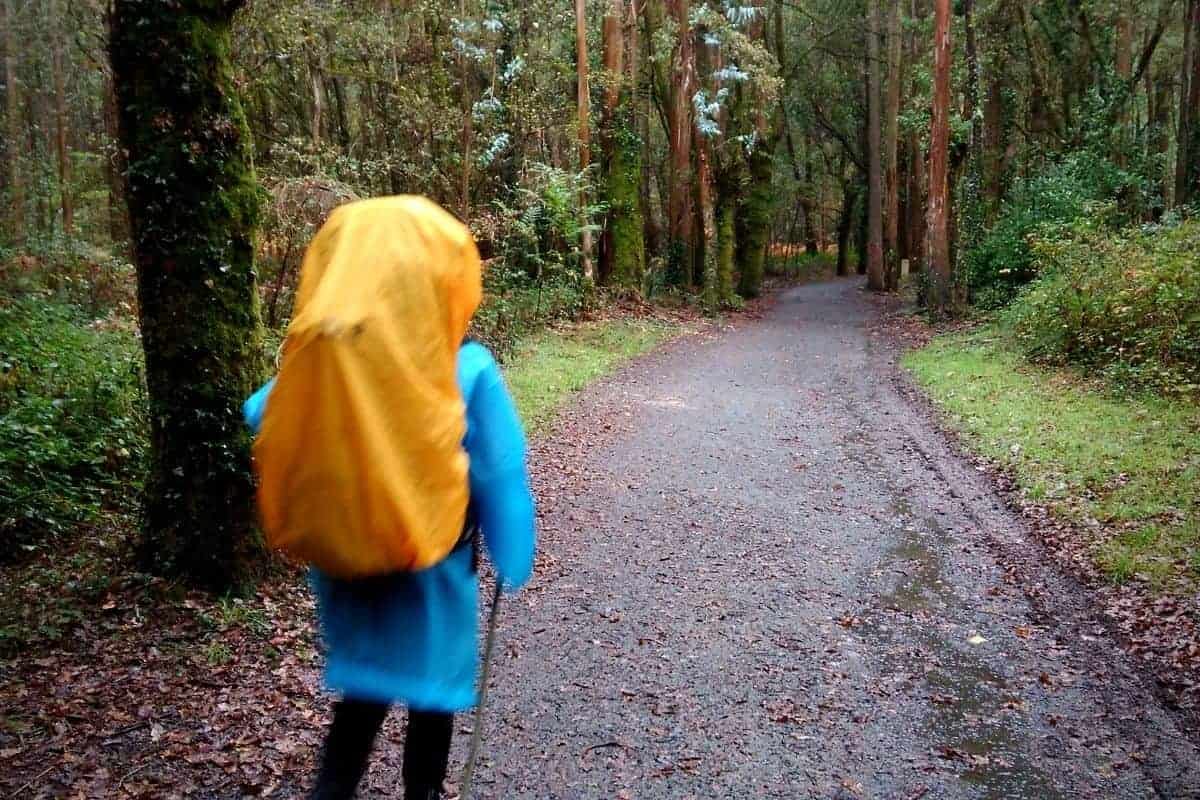
Finisterre is a short but genuine route of around 89 kilometres through the hilly Galician hinterland. It rolls up and down through eucalyptus forests, over open ridges and past small villages, before it finally drops down towards the coast. There are some solid climbs along the way, but no real mountains. The last kilometres out to the cape itself run along the sea with a wide view over the Atlantic. The surface is forest paths, gravel roads and cobbles, and the Galician weather can bring rain and damp in every season. In ordinary shape the route is manageable, and the few days give good room to enjoy it slowly and let the journey sink in.
Finisterre suits you if you have just reached Santiago and are not ready to stop yet. It is for the pilgrim who wants to give their Camino an ending by the sea, watch the sun set at the end of the world and round it all off in a quiet, symbolic way. It also works fine as a short, standalone walk if you only have a few days.
Since the route starts in Santiago de Compostela, you are already there if you have walked another Camino. If you want to walk Finisterre as a standalone trip, you fly to Santiago's airport and set out from the cathedral. Once you reach Finisterre or Muxía, daily buses run back to Santiago, so you easily get back and onward home.
April to October is best, with long days and mild temperatures by the coast. Galicia is green because it rains, so pack proper rain gear whatever the season.