Routes · Spain
What is the Camino de Santiago, really? All the routes explained
The Camino de Santiago is not one trail but a whole network of pilgrim routes. Here is how it works and how to choose the right Camino for you.
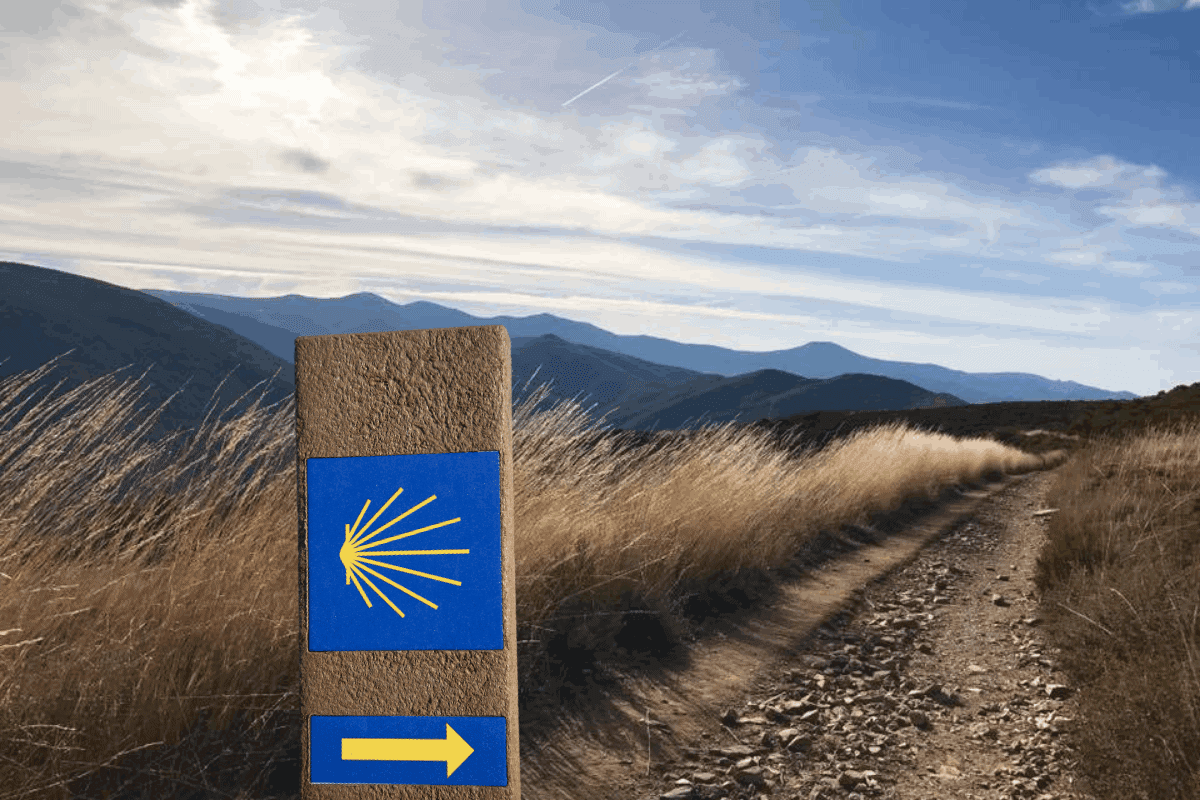
When I first set out for the Camino, the one that starts in the south of France, I believed what most people believe: that there is only one Camino. It turned out that the Camino de Santiago is a huge pilgrim network, with routes all over Europe.
The purpose of all these routes is the same. They lead to Santiago de Compostela, the capital of Galicia in northwestern Spain. As with every good rule, there is an exception, and we will get to it further down.
In this article I will try to cover the whole picture: the many roads, the most famous routes, and the questions almost everyone asks before their first Camino.
The Most Famous Camino Routes at a Glance
You can start your personal Camino almost anywhere in Europe. You simply need to find one of the many ways that lead to the cathedral in Santiago de Compostela. The network keeps growing, so it is genuinely hard to say exactly how many routes exist.
Here are the seven best-known routes of the Camino de Santiago, also called the Way of St. James:
- Camino Francés (about 780 km)
- Camino del Norte (about 825 km)
- Camino Portugués (about 610 km)
- Camino Primitivo (about 370 km)
- Camino Inglés (about 120 km or 75 km)
- Vía de la Plata (about 800 km)
- Camino Finisterre-Muxía (about 87 km plus 29 km)
Below you will find a fuller introduction to each of the seven, a list of lesser-known Spanish routes, and answers to the practical questions that follow.
Camino Francés (The French Way)
The Camino Francés is the route people usually mean when they simply say “the Camino.”
Start: Saint-Jean-Pied-de-Port. Length: about 780 kilometres.
Where you start and how far you walk is entirely up to you. Most recommendations suggest around 26 to 33 stages if you want to walk the whole route. The way is full of albergues, hotels and places to sleep, and it offers an endless supply of culture, landscapes and fascinating people. The Camino delivers everything you need.
Bonus info: there are plenty of alternative paths along the way, which is why quoted distances vary. Several times you will get to choose a variant, and each one offers its own mix of history, culture and nature.
Read the full route guide here: Camino Francés.
Camino del Norte (The Northern or Coastal Way)
If you are out walking the Francés, you cannot avoid hearing about the Camino del Norte. This route follows the northern coast of Spain, and despite a nearly identical length to the French Way, it offers something quite different: more beaches, greener country and far fewer people.
Start: Irún. Length: about 825 kilometres.
The Norte is a great alternative if you want a long route but prefer less crowded paths. Many walkers choose it, or the Portugués, when they love coastline or need a change from the French Way. A lot of pilgrims start dreaming about the Camino del Norte the moment the Francés has given them a taste for long-distance walking.
Camino Portugués (The Portuguese Way)
I walked from Porto to Santiago de Compostela about half a year after finishing the entire Camino Francés. The two routes offer very different experiences, and if you want to see Portugal, this is a wonderful way to do it.
Start: Porto or Lisbon. Length: about 230 km from Porto or 610 km from Lisbon.
If you like combining a beach holiday with a walking holiday, the Camino Portugués might be an option you never considered. I walked it in the middle of summer, and it gets seriously hot at that time of year. On the bright side, you get plenty of chances to jump in the sea.
Camino Primitivo (The Original Way)
Do you like mountains and hard terrain? The Camino Primitivo is about 370 kilometres long and runs through northern Spain. It is usually divided into 14 to 16 stages, and it is considered the toughest Camino of them all.
Start: Oviedo. Length: about 370 kilometres.
You can easily combine the Camino Primitivo with the Francés or the Norte, since all three run through northern Spain toward the same destination. It is also the oldest Camino route, and it is stunningly beautiful.
Camino Inglés (The English Way)
This historic trading route is best known among walkers from Britain and Ireland, and it is sometimes called the Old Royal Route. It is one of the shortest of the famous Caminos. Most people start in Ferrol rather than A Coruña, because you need to cover at least 100 kilometres on foot to qualify for the pilgrim certificate called the Compostela.
The Compostela is your proof that you walked the Camino. You cannot use it for anything practical, but it makes a fine addition to the collection of memories the route gives you.
Start: Ferrol or A Coruña. Length: about 120 kilometres or 75 kilometres.
The Camino Inglés is growing in popularity, yet in 2019 only around 4.5 percent of all arriving pilgrims had chosen it. You will find more statistics further down.
Vía de la Plata (The Silver Route)
The Vía de la Plata is the longest Camino you can walk on well-established trails, and among the popular Spanish routes it is the one with the fewest pilgrims.
Start: Seville. Length: roughly 1000 kilometres.
If you want a long, hard route that is not crowded, this southern giant is the one many experienced walkers choose. Like the other Caminos, the Vía de la Plata is packed with history and beautiful places.
Camino Finisterre-Muxía
This is the exception mentioned earlier. It differs from every other Camino by starting in Santiago de Compostela instead of ending there. The route is an extension that takes you out to the Atlantic coast, to the place once called the end of the world.
Many pilgrims get bitten by the Camino while walking it and simply continue on this route after reaching their supposed goal.
Start: Santiago de Compostela. Length: about 89 kilometres to Finisterre, or around 116 kilometres including Muxía.
I have continued to Finisterre several times, but I still have the final stage to Muxía ahead of me. It is said to show you a more authentic side of Galicia, a region overflowing with good stories and hidden treasures.
Lesser-Known Camino Routes in Spain
As mentioned, routes belonging to the Camino de Santiago network exist all over Europe, and similar pilgrim paths are appearing in many parts of the world. The most famous ones are in Spain. If you would like a few more names to research, this list is a good starting point:
- Camino de Madrid
- Camino Catalán
- Camino de Invierno
- Camino Mozárabe
- Camino de Levante
- Camino de Gran Canaria
What Is Santiago de Compostela?
Do the words Caminoen, Camino de Santiago and Camino de Compostela blur together for you? They certainly did for me in the beginning. They sound alike, but they mean different things.
As I have mentioned a few times, “the Camino” usually refers to the Camino Francés, since more than half of all pilgrims arriving in the city have chosen that route.
Santiago de Compostela is the capital of Galicia in northwestern Spain. The apostle Saint James is buried in the city’s cathedral, which is why the pilgrimage is known in English as the Way of St. James.
Camino de Santiago is the collective name for the Christian pilgrimage that leads to that cathedral. That said, most of the pilgrims I met on my journeys were far from religious, so do not let that scare you off. I am not religious myself, and I still had the time of my life out there.
The city itself has slightly fewer than 100,000 inhabitants, but every year many thousands of pilgrims arrive and fill it with life. This is where you celebrate, and where you bump into people you met weeks earlier on the trail. Some of the best and most satisfying celebrations of my life have happened in Santiago. I hope yours will be just as good.
Which Camino Should I Choose?
Many people hesitate before their first Camino, and plenty never go at all. There are several reasons, but the biggest one is simple: the most famous route is around 800 kilometres long.
Fortunately there are many options, so the task is to find the Camino that fits you.
For the full Camino experience I would personally recommend going abroad, and especially to Spain. Pick one of the seven routes above. Most people would advise the Camino Francés for the ultimate first Camino, but that does not mean another route might not suit you better.
Do a little research on the different routes before deciding. And it is important to stress that you do not have to walk an entire route, or even 100 kilometres, to have a great trip. You only need at least 100 kilometres on foot if you want to finish with the pilgrim certificate, which requires showing the stamps you collect in your pilgrim passport along the way.
How Do I Prepare and Train for a Camino?
You would think everyone heading out on a Camino has a burning passion for hiking, but that is often not the case. Many people are shocked by how hard the walking is, because they are not used to carrying a heavy backpack through rough terrain.
You typically spend most of the day on your feet, sometimes on hard stone paths climbing or descending serious hills. Many pilgrims end up with blisters, back pain, knee trouble or worse, and that can ruin the experience.
On my first Camino I used the route itself to get in shape instead of training beforehand. Even though I am reasonably fit, it is a very different kind of challenge from what most of us are used to. I suffered enormous blisters and an overloaded sciatic nerve, and I watched several walking companions forced to stop because of pain.
So it is a good idea to train at home. I did exactly that before my next Camino, and I also carried a much lighter backpack. The result was that pain never crossed my mind, which left all my energy free for exploring.
Train at Home with a Loaded Backpack or Weight Vest
Personally I train daily with a 15 kg weight vest, because I have discovered how effective walking with extra weight is in general. It has improved my running too, and it makes everyday life feel lighter and easier. I recommend it whether you are preparing for a Camino or simply want to get in great shape.
You can also just load up your backpack at home. That doubles as packing practice, though few people enjoy having a fully packed backpack standing around, which is where a weight vest becomes a small luxury.
What Should I Bring on the Camino de Santiago?
I love gadgets, so my backpack is often overfilled. But I keep learning, little by little, how wonderful a light backpack is. You can buy most things along the way, because the Camino is a remarkably civilised pilgrim network. On the Camino Francés in particular, you can find everything your heart desires.
The most important things to sort out before you travel are:
- Your travel documents: tickets, passport, health insurance card and payment cards
- The essentials for your backpack and a good pair of shoes
You can pick up most of the rest along the route, but if you like being well prepared, browse our guides for packing and planning help.
How Do You Find and Follow the Camino?
Since there are so many Caminos, there is no single answer. Heading toward the cathedrals is often a decent instinct, but more practically, the major Caminos are well marked with yellow arrows and scallop shells, the symbols of the pilgrimage. Ask locals and fellow pilgrims for directions when in doubt. I have never had trouble finding a Camino when starting from one of the well-known towns.
Camino Route Statistics
In 2024, almost 500,000 pilgrims reached Santiago, a record year. Here is how they spread across the routes:
| Route | Share of pilgrims |
|---|---|
| Camino Francés | 47% |
| Camino Portugués | 19% |
| Camino Portugués (coastal) | 15% |
| Camino Inglés | 5.6% |
| Camino Primitivo | 4.9% |
| Camino del Norte | 4.3% |
Source: the Pilgrim’s Office in Santiago de Compostela (oficinadelperegrino.com), 2024.
Wherever you start and whichever arrows you follow, the road ends at the same cathedral square. See you out there.
Buen Camino.
Camino King
The walker who never stopped
Michael walked his first Camino in 2016 and has kept going ever since. He writes about the routes, the gear and everything that makes a long walking day good. If it is here, it has been walked, worn or weighed.
Read next
Planning
I brought my laptop on the Camino, here's what actually happened
I brought my laptop on the Camino de Santiago. Here is how working a few hours a day on a pilgrimage actually feels, and whether you should try it.
Mindset
Camino tattoo ideas, and the sunburn lesson I learned the hard way
Many pilgrims mark the Camino with a tattoo. Here is inspiration for your Camino tattoo, a real pilgrim's story and a lesson I learned the hard way.
Planning
Cycling the Camino: yes, even Ronaldo has done a stretch
Yes, you can cycle the Camino de Santiago. Here is what to expect from the terrain, the daily distances and how to prepare your bike and body.