Planning · Spain
How long is the Camino? Length, stages and time
The Camino Francés is around 770-775 km and takes 25-35 days to walk. See the stages, their distances and what the terrain is really like.
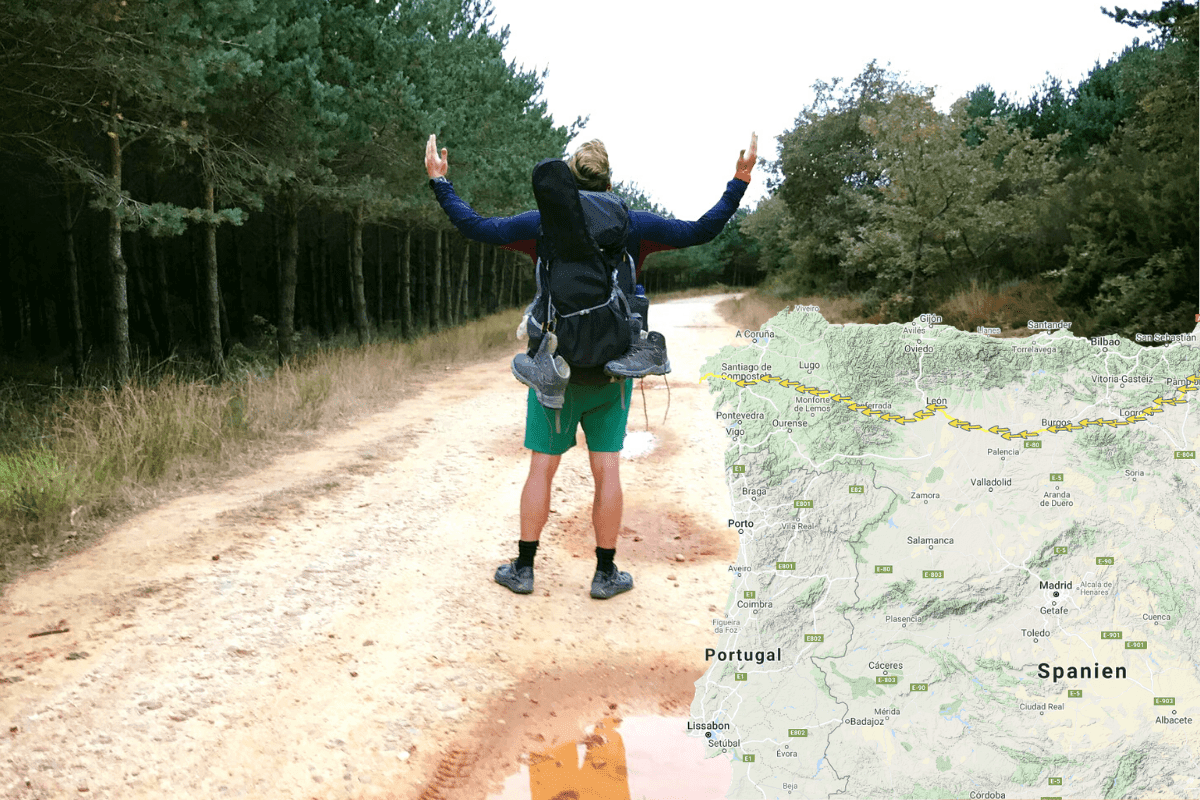
One of the questions I get most often is how long it takes to walk the Camino. The first thing I always point out is that there are many different Caminos, but in 95 percent of cases people are asking about the Camino Frances. So here is the quick answer.
How long does it take to walk the Camino? It depends on how fast you walk and which route you choose, but the Camino Frances is around 775 kilometres and usually takes between 25 and 35 days. The official route is divided into 31 stages, so it takes 31 days if you follow the standard itinerary.
Want to know more about the distance, the terrain and the individual stages? Keep reading. Below you will find the full list of stages on the French route.
How long is the Camino?
The Camino de Santiago is a huge pilgrim network with routes all over Europe, in many different lengths. There is no single answer to how long “the Camino” is, but the French route is roughly 750 to 800 kilometres, and since it is by far the best-known Camino in the world, that is the route this article covers. If you want an overview of the other well-known routes in Spain, have a look at the guides section.
Most Caminos have alternative paths you can take, so there is never one exact distance. People usually say the Camino Frances is 800 kilometres and takes about 30 days.
A few useful numbers if you follow the official stages:
- The route is divided into 31 stages, so the standard itinerary takes 31 days
- The longest stage is around 37 kilometres
- The shortest stage is around 19 kilometres
- You need to average about 25 kilometres per day to finish in 31 days
The stages of the Camino Frances
Many people get a shock on day one. The first stage is clearly the hardest, crossing the Pyrenees from France into Spain. It is also many pilgrims’ favourite, because you climb high into bare mountains. More mountain stages come later in the route, but by then you are used to the terrain and to walking long distances. Challenges can still show up on plenty of stages.
Here is the full overview of the official stages on the French route, with distance and the number of albergues (pilgrim hostels) on each stage:
- Saint-Jean-Pied-de-Port to Roncesvalles (25.7 km, 9 albergues)
- Roncesvalles to Zubiri (21.5 km, 7 albergues)
- Zubiri to Pamplona (20.4 km, 17 albergues)
- Pamplona to Puente la Reina (24 km, 14 albergues)
- Puente la Reina to Estella (22 km, 9 albergues)
- Estella to Torres del Rio (29 km, 8 albergues)
- Torres del Rio to Logrono (20 km, 10 albergues)
- Logrono to Najera (29.6 km, 14 albergues)
- Najera to Santo Domingo de la Calzada (21 km, 5 albergues)
- Santo Domingo de la Calzada to Belorado (22.7 km, 11 albergues)
- Belorado to Ages (27.4 km, 10 albergues)
- Ages to Burgos (23 km, 9 albergues)
- Burgos to Hontanas (31.1 km, 11 albergues)
- Hontanas to Boadilla del Camino (28.5 km, 15 albergues)
- Boadilla del Camino to Carrion de los Condes (24.6 km, 12 albergues)
- Carrion de los Condes to Terradillos de los Templarios (26.6 km, 6 albergues)
- Terradillos de los Templarios to El Burgo Ranero (30.6 km, 13 albergues)
- El Burgo Ranero to Leon (37.1 km, 18 albergues)
- Leon to San Martin del Camino (25.9 km, 9 albergues)
- San Martin del Camino to Astorga (24.2 km, 10 albergues)
- Astorga to Foncebadon (25.9 km, 17 albergues)
- Foncebadon to Ponferrada (27.3 km, 10 albergues)
- Ponferrada to Villafranca del Bierzo (24.1 km, 12 albergues)
- Villafranca del Bierzo to O Cebreiro (28.4 km, 16 albergues)
- O Cebreiro to Triacastela (21.1 km, 9 albergues)
- Triacastela to Sarria (18.3 km, 27 albergues)
- Sarria to Portomarin (22.4 km, 25 albergues)
- Portomarin to Palas de Rei (25 km, 19 albergues)
- Palas de Rei to Arzua (28.8 km, 27 albergues)
- Arzua to O Pedrouzo (19.1 km, 13 albergues)
- O Pedrouzo to Santiago de Compostela (20 km, 15 albergues)
A little history of the French route
The French route has been the most popular Camino ever since it was discovered that St. James, one of the twelve apostles, lay buried in the cathedral in Santiago de Compostela. It has been one of the most important Christian pilgrimage routes for the last 1,000 years.
Today the route is walked by hikers from all over the world. Most people you meet walk it for spiritual reasons, though not necessarily religious ones. The route starts in France and runs almost entirely through northern Spain.
What is the terrain like?
You walk roughly 800 kilometres across Spain, and a question I often get is what kind of ground you actually walk on. Some people are surprised that parts of the route follow paved roads, and others are surprised that you cross real mountains. When you walk 800 kilometres through Spain, you meet a bit of everything.
Some areas are stunningly beautiful. You also pass through plenty of towns that look unremarkable at first glance, yet the French route is full of good atmosphere and culture, and I kept finding hidden gems. You may well find yourself alone on a 25 kilometre gravel track, and that can be a fantastic experience in itself.
To the end of the world
If 31 days feels like too little, you can extend the walk beyond Santiago to Finisterre on the Atlantic coast, a place once considered the end of the world. And if 775 kilometres feels like too much, remember that you do not have to walk the whole route. Many pilgrims start further along and walk the final stretch to Santiago.
Preparing for your Camino?
This site is written by a pilgrim who loves sharing hard-earned experience from long walks. If you are getting ready, you might also like the complete Camino packing list and the guide to what food costs on the Camino, both in the guides section. Buen Camino.
Camino King
The walker who never stopped
Michael walked his first Camino in 2016 and has kept going ever since. He writes about the routes, the gear and everything that makes a long walking day good. If it is here, it has been walked, worn or weighed.
Read next
Planning
I brought my laptop on the Camino, here's what actually happened
I brought my laptop on the Camino de Santiago. Here is how working a few hours a day on a pilgrimage actually feels, and whether you should try it.
Mindset
Camino tattoo ideas, and the sunburn lesson I learned the hard way
Many pilgrims mark the Camino with a tattoo. Here is inspiration for your Camino tattoo, a real pilgrim's story and a lesson I learned the hard way.
Planning
Cycling the Camino: yes, even Ronaldo has done a stretch
Yes, you can cycle the Camino de Santiago. Here is what to expect from the terrain, the daily distances and how to prepare your bike and body.