Planning · Spain
I brought my laptop on the Camino, here's what actually happened
I brought my laptop on the Camino de Santiago. Here is how working a few hours a day on a pilgrimage actually feels, and whether you should try it.
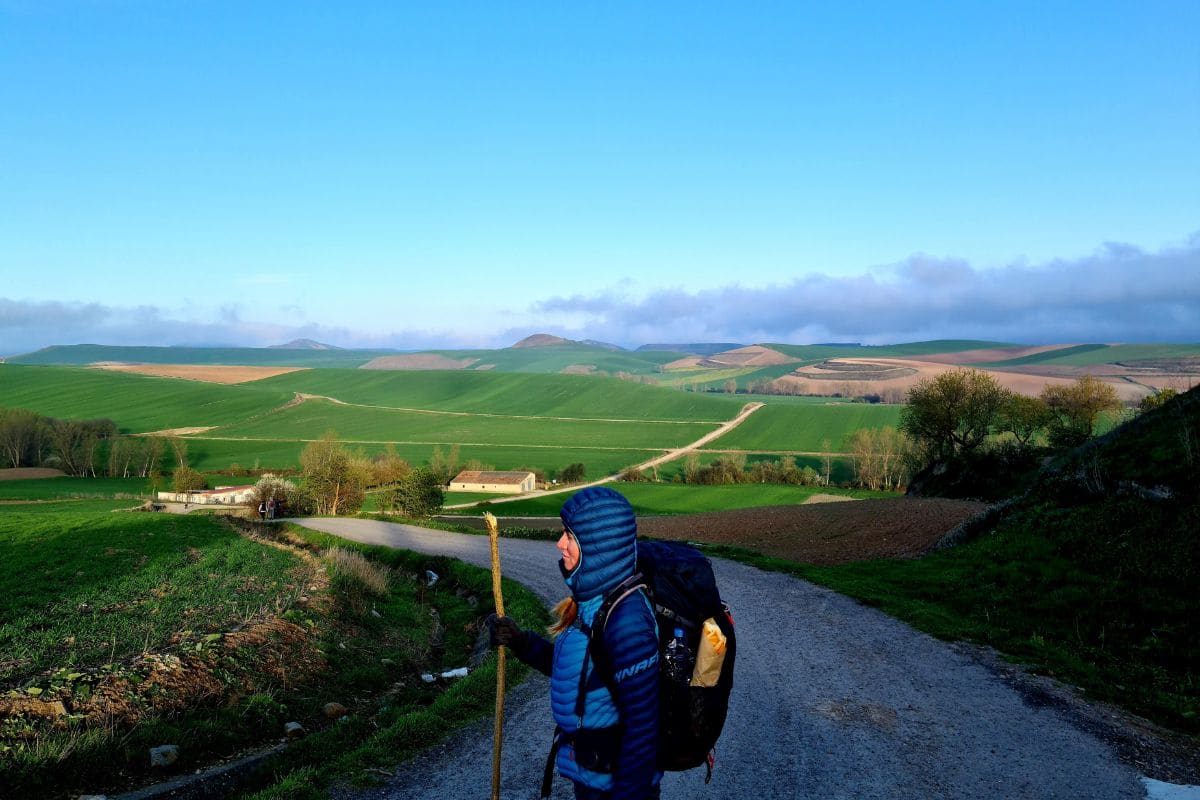
Every time I tell people that I have worked along the way on the Camino, the reaction comes in one of two flavours. The first is surprised admiration: “How clever, a sabbatical with a salary.” The second is disappointment: “That is exactly what you should not do. It is a pilgrimage route, it is not meant to be your office.”
Both reactions say something about what we expect from a walk like the Camino. Either it should be the ultimate productivity hack, or it should be the total pause from everything. The truth, as with most things, is more nuanced.
Why I Even Considered It
The first time I walked the Camino, in 2016, the question did not really exist. EU roaming was not yet free, the WiFi along the route was unreliable, and laptops weighed so much that carrying a MacBook Pro felt like a daily punishment. That was a good thing. I was forced to be offline.
Since then the world has changed. Mobile data coverage is solid for most of the way. My current laptop weighs practically nothing. Even small villages now have cafés with dependable internet. Which means working along the way has become a choice again, and suddenly finding the balance is my own responsibility.
What the Camino Is Actually For
This is where I want to be honest with you. The Camino is not a trip for getting things done. It is built around something else entirely: the physical movement, the encounters with other pilgrims, the silence of the early mornings, the way you walk yourself into a rhythm that has no hurry in it. That is what has drawn people down there for more than a thousand years, and it is still what draws me.
If you do bring your work, it is worth being clear with yourself about one thing. The work must not define the trip. It should sit inside the Camino’s rhythm, and it should never be allowed to overwrite it.
When I have that mindset in place, the combination genuinely works. After seven or eight hours of walking, the body has spent its energy, and the mind finds a stillness that is hard to come by in an ordinary working week. It is often in that stillness that the sharpest work happens. I have written better in a small bar in Galicia after a long day on the trail than on most Monday mornings at home.
What the Work Looks Like in Practice
It is not full-time work. It is two to three hours a day, rarely more, and only on some days. Typically it happens in the afternoon, once I have arrived at an albergue and had something to eat. Occasionally it happens in the morning, if I am starting later than usual.
Most recently I was writing content for a client on a very down-to-earth business topic. There is something interesting about sitting with exactly that kind of task in a place where time moves differently. You develop a different relationship with what is worth saying and what is just filler. The trail edits your writing for you.
A practical note on equipment: a light laptop, a phone with a data plan and the café WiFi you find in almost every town is genuinely all it takes these days. If your setup weighs more than that, it will punish you for every kilometre, and the trade stops being worth it.
The Spiritual Side Effects
This is where it gets a little more humbling. Something happens to your relationship with work when you work while you walk. It becomes less urgent. Less important. More dependent on whether it truly matters.
For many of us, work is a big part of our identity. The Camino shifts that relationship without making a fuss about it. You walk, you meet people, you sleep on a mattress that is not your own, you get up again, and once during the day you take out the laptop and do the one piece of work that really matters to you. The rest can wait.
For me that is a more sustainable way of working than the one that rules at home, where I, like most people, end up doing work that does not mean much but simply feels required.
Should You Bring Your Work?
My answer is: it depends on you. But if you do it, make sure it is work that carries meaning for you. Do not bring administrative tasks. Do not bring meetings. Bring something that calls for the sharpness the Camino gives you, and leave behind anything that merely fills the time.
And never forget what you came out there for. The Camino is not your workplace. It is the place where work finds its proper place.
If you are still planning your first walk and wondering which route suits a longer stay, the Camino Francés has the best café and connectivity infrastructure of them all, and our guides can help you with the rest of the preparation.
Buen Camino.
Camino King
The walker who never stopped
Michael walked his first Camino in 2016 and has kept going ever since. He writes about the routes, the gear and everything that makes a long walking day good. If it is here, it has been walked, worn or weighed.
Read next
Mindset
Camino tattoo ideas, and the sunburn lesson I learned the hard way
Many pilgrims mark the Camino with a tattoo. Here is inspiration for your Camino tattoo, a real pilgrim's story and a lesson I learned the hard way.
Planning
Cycling the Camino: yes, even Ronaldo has done a stretch
Yes, you can cycle the Camino de Santiago. Here is what to expect from the terrain, the daily distances and how to prepare your bike and body.
Mindset
Books about the Camino: what I read before my first walk
A hiker's reading list for the Camino de Santiago: guidebooks, memoirs and pilgrimage classics worth reading before you lace up your boots.