Planning
Luggage transfer on the Camino: how it works
How luggage transfer works on the Camino. Booking, labels, weight limits, prices from Correos and private carriers, and what it means for the Compostela.
Luggage transfer on the Camino works like this: you book with a carrier, put a label on your bag and leave it at reception in the morning. The carrier drives it to your next accommodation, where it is waiting when you arrive. You walk with a small daypack holding water, rain gear and valuables.
The service exists on all the main routes in season, and it does not cost you the right to a Compostela. It has two practical limits. You need to know your next accommodation by the evening before, and many public albergues do not accept transported bags.
How it works day by day
The Spanish postal service Correos describes its Paq Mochila service in the most detail, and the private carriers follow the same pattern. The figures below are Correos’ own, checked in November 2026.
| Step | Rule at Correos |
|---|---|
| Booking | Online, by 8 pm the day before the transfer |
| Labelling | Label sent by email, or a piece of paper with your details |
| Drop-off | At reception before 8 am |
| Delivery | At the next accommodation before 2.30 pm |
| Weight | At most 15 kg per bag |
| Distance | At most 60 km per day |
If you have not booked online, you use a Paq Mochila envelope, which many accommodations keep. Everything has to be packed inside the bag. Boots, sleeping bags and mats must not hang on the outside.
The accommodation needs a reception that is open from 8 am to 3 pm, or an access code for the door. You need a reservation or the accommodation’s clear permission to leave the bag there.
The carriers and their routes
| Carrier | Routes according to the carrier’s own site | Season |
|---|---|---|
| Correos Paq Mochila | Francés from Roncesvalles, Portugués from Porto (central, coastal and Variante Espiritual), Primitivo from Oviedo, Norte from Irún, Inglés from Ferrol, Sanabrés from Ourense, Fisterra and Muxía | Full network 16 March to 31 October 2026. From 1 November only Sarria to Santiago and Tui to Santiago |
| Jacotrans | Camino Francés from Saint-Jean-Pied-de-Port or Roncesvalles to Santiago and Finisterre | All year according to the company |
| Caminofácil | Francés, Portugués (central and coastal), Espiritual, Primitivo, Norte, Inglés, Sanabrés and Fisterra | Not stated |
| NCS | The whole Camino Francés from Roncesvalles to Santiago, split into four sections | Seasonal. Closed to new bookings in November 2026 |
Correos does not operate on 24, 25 and 31 December or 1 January. The guide site Gronze keeps a full list of several smaller carriers, including on the Camino Portugués and the Camino Inglés. The Camino Francés gives you the widest choice of carriers.
What it costs
None of the four carriers shows a fixed price per stage on its front page. The price is calculated in the booking form from the route and the number of stages. These are the figures that could be confirmed with the carriers themselves:
- Correos stated in March 2026 that Sarria to Santiago cost 30 euros in total for one bag of up to 15 kg, however many days you spend on the stretch.
- Correos gives a discount when you book five stages or more. The size of the discount is not stated.
- Jacotrans has a limit of 15 kg per item and gives quotes by email based on dates, towns and number of bags.
The travel agency Santiago Ways gives a typical level of 4 to 7 euros per stage and a usual weight limit of 20 kg. The figure is undated and does not come from a carrier, so use it only as a rough guide.
Public albergues rarely accept bags
Correos writes plainly that it is not possible to leave backpacks in the public albergues. If you stay in one, you must arrange another collection point, for example a bar or a private albergue in the same town, and tell Correos.
This follows from the albergues’ rules. In Galicia, the Xunta’s Decree 45/2001 states that places in the public albergues are allocated on arrival and that reservations are not possible. The decree puts people travelling with a support car last in the queue, after pilgrims on foot, on horseback and by bicycle.
If you want to use luggage transfer every day, you should therefore plan on private albergues, guesthouses or hotels. Look up the Spanish accommodation terms in the Camino glossary before you book.
Send a suitcase straight to Santiago
If you bring clothes for a holiday after the walk, you can send them ahead. Correos’ Paq Peregrino service costs from 20.95 euros (checked November 2026) and is offered for parcels of up to 15 kg and up to 25 kg. The price covers 15 days of storage, and you can buy an extension in advance. The parcel can be sent to Santiago, to a post office along the route or to a private address.
The Correos post office in Santiago is at Rúa do Franco 4, close to the cathedral, and also has left luggage. Jacotrans and Caminofácil offer shipping and storage in Santiago as well. See also the guide to arriving in Santiago.
Does it affect your Compostela
No. The pilgrim office in Santiago requires you to cover at least 100 continuous kilometres on the same route on foot or on horseback, with the final stage leading into Santiago. The credencial must be stamped along the way, and the office asks for at least two stamps a day over the last 100 kilometres.
The rules mention neither backpacks nor luggage transfer. They exclude other ways of travelling than on foot, on horseback and by bicycle, except for people with disabilities. So you are the one who has to walk the distance. The bag is allowed to ride. The guide to the last 100 km from Sarria covers the shortest stretch that qualifies.
Is it right for you
Luggage transfer makes sense if your back, knees or hips cannot take the weight, if you are bringing a lot, or if you are walking a short trip with fixed accommodation. It suits you less if you like to decide the day’s end point along the way or want to sleep in public albergues. A lightly packed backpack is the alternative that gives you full freedom.
Frequently asked questions
How much does luggage transfer cost on the Camino?
Can you send your backpack to a public albergue?
Do you lose the right to a Compostela if you use luggage transfer?
How heavy can the bag be?
When do you have to book?
Does luggage transfer run all year?
Camino King
The walker who never stopped
Michael walked his first Camino in 2016 and has kept going ever since. He writes about the routes, the gear and everything that makes a long walking day good. If it is here, it has been walked, worn or weighed.
Read next
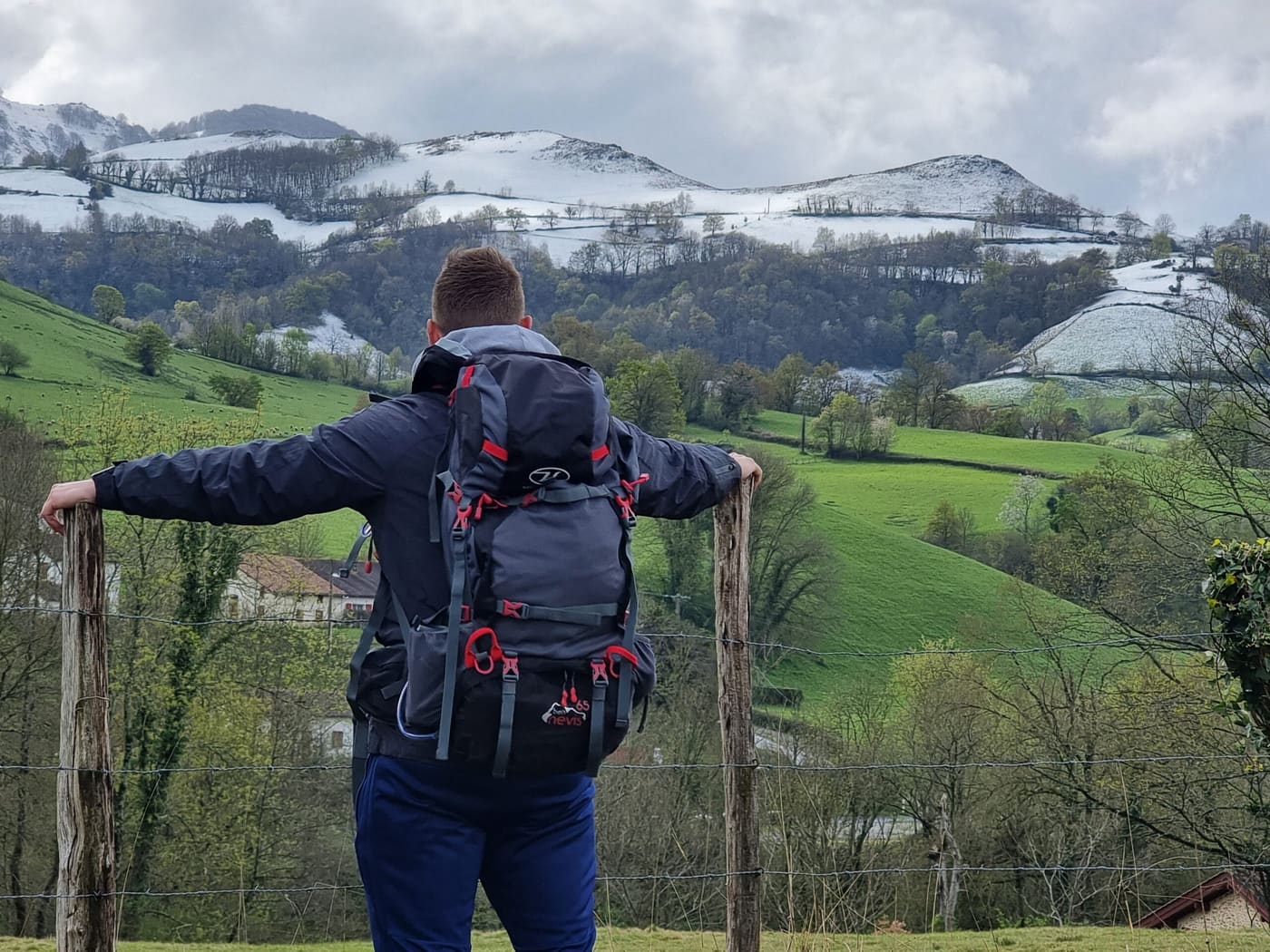 Gear Choosing a Camino backpack: lessons from a 65 litre pack How to pick the right backpack for the Camino: sizes in liters, weight rules, packing order and the five features that matter most on a long walk.
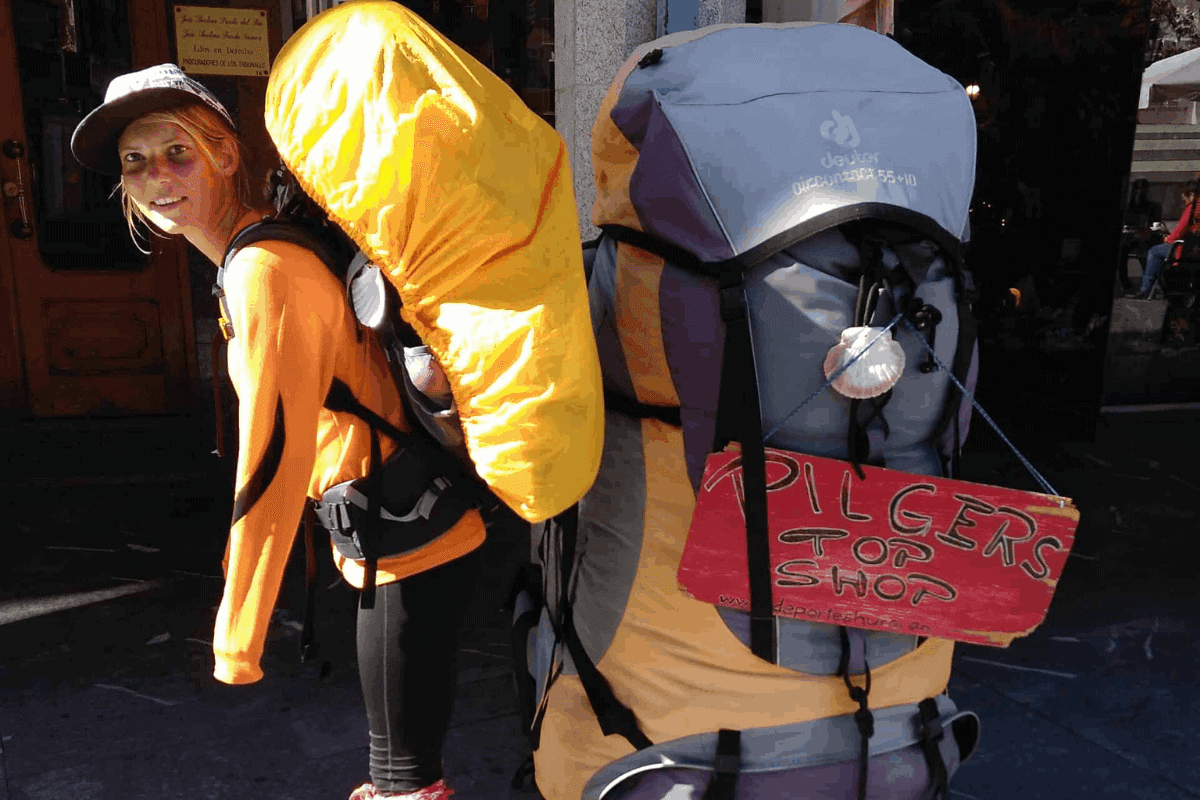 Packing The Camino packing list, tested on several routes A field-tested Camino packing list from a hiker who has walked several routes. What to bring, what to leave at home, and answers to common questions. Planning The last 100 km from Sarria: the Camino in a week Sarria to Santiago is about 114 km in five stages. See the stages, the Compostela rules, how busy it gets and five quieter routes of the same length.