Gear
Choosing a Camino backpack: what I learned from a 65 litre pack
How to pick the right backpack for the Camino: sizes in liters, weight rules, packing order and the five features that matter most on a long walk.
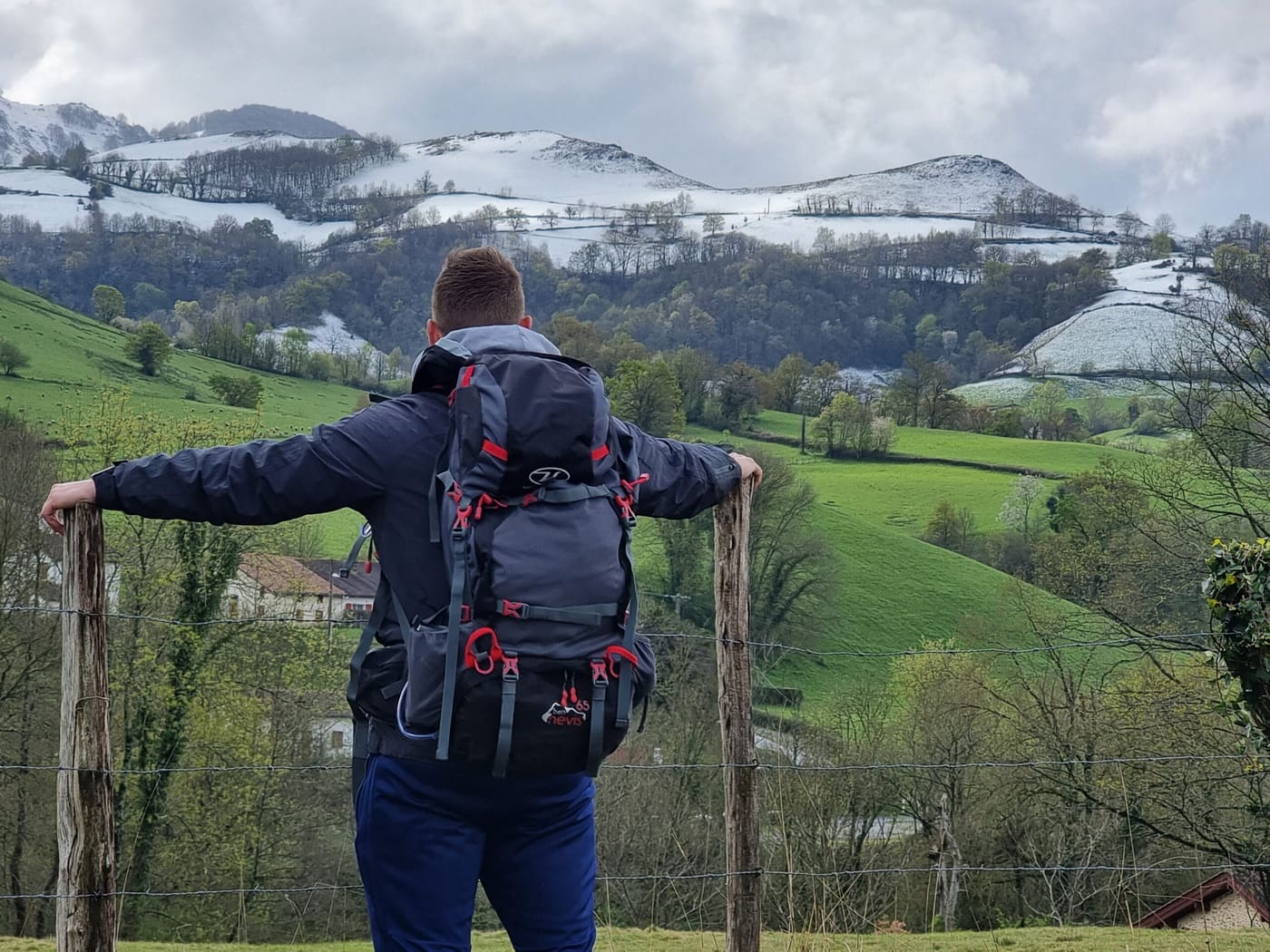
If you are unsure which backpack to choose for your hike, I understand completely. On a long walk like the Camino Francés, your backpack quickly becomes your best non-living friend. It can just as quickly become a source of deep frustration if you pick the wrong one, so it pays to think it through before you buy.
I walked the Camino Francés with a 65-liter pack on my back, and everything I recommend below comes from carrying it day after day for a month. Here is how to find the pack that fits you.
How big should my backpack be?
The most important thing is that your backpack matches your needs. How long will you be travelling, and what do you expect from it? Size is almost always the first step toward the right choice, and capacity is nearly always given in liters.
Use this table as a starting point:
| Size | Capacity | Recommended for |
|---|---|---|
| Mini backpacks | 6-10 liters | Running, kids, day trips |
| Small backpacks | 10-30 liters | Day hikes, everyday use |
| Medium backpacks | 30-50 liters | Overnight trips, hiking, the Camino |
| Large backpacks | 50+ liters | The Camino, long-term travel, expeditions |
One of the questions I get most often is which backpack size suits the Camino best. There is no single right answer, and there is no right answer to how much it should weigh either. Personally I love having a large 65-liter pack so all my outer layers fit inside without clever workarounds. My walking companion managed perfectly well with a 40-liter pack, so both approaches work.
How much should the pack weigh?
A rule of thumb many hikers know for long-distance walking is that your loaded backpack should be around 10 percent of your body weight. If you weigh 100 kg, your pack should weigh around 10 kg. That is hard to stick to on a 30-day Camino, which is why the usual upper limit is 20 percent of your body weight. In practice, most people would regret packing anywhere near that much.
If you want to see exactly what goes into a well-weighted Camino pack, my guides walk through packing in more detail.
How to pack a backpack
You should of course pack in whatever way suits your trip best, but there are three rules I always follow:
- Pack the lightest items at the bottom of the backpack
- Pack the heaviest items in the middle of the backpack
- Pack the most essential items at the top of the backpack
A quick example from my own routine: my sleeping bag, rain jacket and flip-flops always go at the bottom. The middle holds mostly clothes, and I keep my laptop and power bank in the compartment that sits against my back, where the weight rides closest to my spine. That is one more reason I like a large pack, since everything has an obvious place.
What should a good backpack cost?
Outdoor gear can get expensive fast. There is no fixed answer to what a good backpack should cost, but you do not need to pay a premium price to get a pack that will carry you comfortably to Santiago. A solid mid-range pack will handle the Camino without complaint.
When it makes sense to spend more
If you are heading into genuinely changeable weather and rough terrain, where you need to trust your pack 100 percent, investing a bit extra is a good idea. If you want to be certain the fabric sheds water, the rain cover and straps will not fail, and the fit is dialled in, a slightly more expensive pack usually delivers.
When a budget pack is enough
You can get remarkably far with an affordable backpack. There are plenty of high-end brands in the outdoor world, and specialist shops often carry mostly the expensive options, but a budget pack with the right features held up fine for me through 30 days on the Camino. Judge the pack by its features and fit, not by its logo.
Five features to look for in your next backpack
A backpack can become your best friend on the trail, but you can also grow tired of it fast if you packed it wrong, packed too much, or chose the wrong one from the start. These are the five features I would insist on when buying:
- Water-resistant fabric plus an included rain cover
- Padded hip belt with pockets, which is a real luxury on the Camino
- Adjustable shoulder straps and an adjustable back system
- Sensible compartments with separate space for clothes, shoes and your sleeping bag
- Room for a hydration bladder or a laptop
All of these are features I have benefited from myself. I would not call a hydration bladder necessary on the Camino, though I see plenty of pilgrims who love theirs. I usually just carry a half-liter bottle in one side pocket and a small speaker in the other to balance the weight. The hip belt pockets are the feature I appreciate most, since they save me from stuffing my trouser pockets or wearing a money belt all day.
Final thoughts
Which backpack is best is genuinely individual, and everyone has different requirements. I hope some of this helps you narrow it down. If you are still planning the bigger picture of your walk, have a look at the six route pages here on the site, starting with the Camino Francés or the gentler Camino Portugués, and use the guides to get your packing right before you go. Buen Camino!
Camino King
The walker who never stopped
Michael walked his first Camino in 2016 and has kept going ever since. He writes about the routes, the gear and everything that makes a long walking day good. If it is here, it has been walked, worn or weighed.
Read next
Gear
Hiking socks for the Camino: the two-layer trick against blisters
Socks decide whether you get blisters on the Camino. My guide to merino wool, the two-layer system, how many pairs, washing and fit, so your feet last all the way.
Gear
Electrolytes for hikers: what they are, and when to skip them
What electrolytes are, why they matter on long hot hikes, and when you can skip them. Practical advice from years of long-distance walking on the Camino.
Gear
Sleeping bag liners: cotton, silk, fleece, or skip the bag
A sleeping bag liner can replace or upgrade your sleeping bag on the Camino. Here is how cotton, silk and fleece compare, and when to bring one.