Gear
Power banks for hiking: what a 100 km night walk taught me
How to pick the right power bank for long hikes and the Camino. Capacity, weight, ports and flight rules explained by a hiker who learned the hard way.
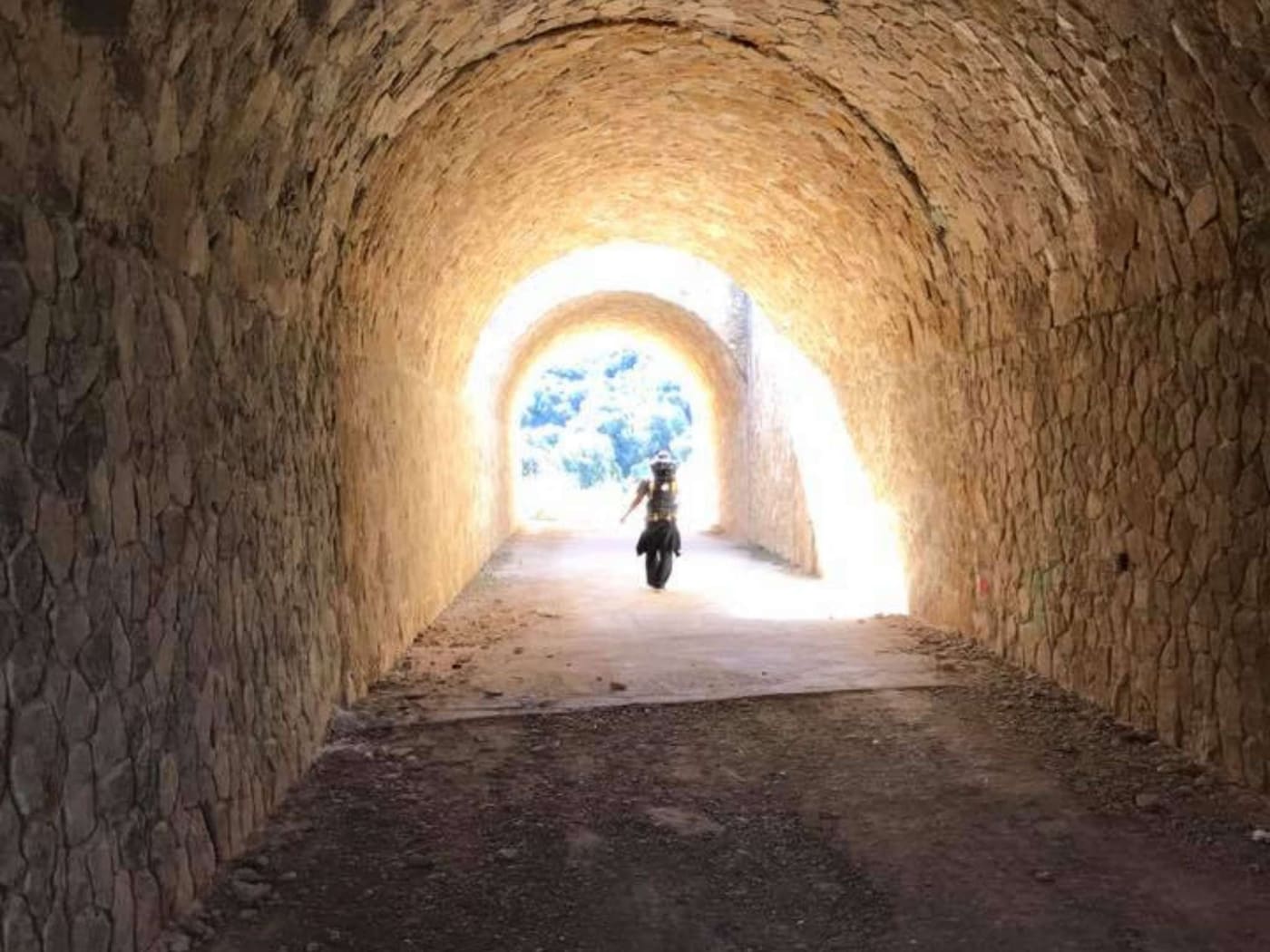
I have always been a little ambivalent about power banks. Over the years I have hauled countless heavy, useless ones around in my backpack, batteries that promised the world and delivered a single half-charge. But after my latest long-distance test I am finally convinced. Power banks have become genuinely good, and this guide will help you find one that earns its place in your pack.
The 100 km walk that changed my mind
I recently came home from MammutMarch in Copenhagen, an event where you walk 100 kilometres in under 24 hours. The route is signposted, but during the night sections you rely heavily on your phone, and especially on GPS. Most phones will not survive 24 hours of navigation, music, photos and everything else you ask of them.
When I crossed the finish line after just under 24 hours of walking, my phone still had 90 percent battery. That was a wonderful feeling, not least because I still needed GPS to get home from the event. My phone, a Galaxy S22 Ultra, had run GPS constantly the whole way, taken plenty of photos and video, and served as my torch, and the power bank kept it topped up throughout.
That single experience turned me from a sceptic into a believer. On a dark road at three in the morning, a charged phone is not a luxury. It is your map, your light and your safety line.
What to look for in a hiking power bank
There is no single best power bank. There is only the best one for your needs, and for hikers those needs are quite specific. When I evaluate one now, I look at four things.
Capacity (mAh)
Capacity is measured in milliamp hours, written as mAh, and it is the first number to check.
- Around 10,000 mAh is the sweet spot for most hikers. It will fully recharge a modern phone roughly two times, it stays reasonably light, and it covered my entire 100 km overnight walk with room to spare.
- 20,000 mAh and up makes sense if you are charging several devices, walking multiple days between outlets, or also powering a watch, headphones and a camera. The cost is weight.
- Small 5,000 mAh models are emergency top-ups, not trail companions.
Be aware that real-world output is always lower than the printed number, since some energy is lost in the transfer. If a full phone charge is non-negotiable for you, buy a size up from what the arithmetic suggests.
Weight and size
On the Camino you carry everything on your back for weeks, so weight matters more than any spec sheet. A slim 10,000 mAh unit typically weighs about as much as a smartphone and slips into a hip belt pocket. The big 20,000 mAh bricks weigh two to three times that. Decide honestly how much charging you need, then carry no more battery than that.
Ports and charging speed
This is where I made my one real mistake, and it is worth learning from. I normally charge my phone with a USB-C to USB-C cable. When I plugged that into my power bank the night before the walk, the power flowed the wrong way: my phone started charging the power bank. Some simpler power banks only deliver power out through a USB-A port and use their USB-C port mainly for charging themselves. I had to dig through my cable drawer for a USB-A to USB-C cable at the last minute, slightly stressed, before everything worked perfectly.
So before any big walk:
- Check which ports actually deliver power out.
- Test the exact cable and phone combination you will bring.
- If you want to charge two devices at once, make sure the bank has two output ports.
An output of 2A at around 10W is enough to charge a phone steadily while you walk. Faster is nicer, but on the trail steady is what counts.
Useful extras, and honest ones
Some features are genuinely handy outdoors: a built-in torch, a battery level indicator, and a rugged, water-resistant housing if you hike in rough weather. IP-rated waterproof models exist and can take real abuse, which is relevant if your pack sees rain, dust and river crossings.
Solar panels on power banks sound perfect for hiking, and the technology keeps improving. Treat the panel as a slow trickle-charger for emergencies rather than a primary charging strategy, though. The panel surface on a pocket-sized unit is small, and a day strapped to a backpack rarely produces a full charge.
Do you even need one on the Camino?
I like a minimalist approach to walking, and on the classic Camino routes you sleep somewhere with electricity every night, so a power bank is not strictly required. But we are all more dependent on our devices than we used to be: the phone, the GPS watch, the headphones. Outlets in busy albergues are few and fiercely contested, and one evening of failing to charge can leave you navigating the next stage on 15 percent.
A power bank removes that whole category of worry. It has saved me more than once, most recently on that 100 km night walk. For anyone walking one of the longer routes, and especially the Camino Francés with its long stages between towns, I now consider a 10,000 mAh bank part of the standard kit. You will find my full packing recommendations in my gear guides.
Can you take a power bank on a plane?
One last tip before you pack. Power banks must travel in your carry-on hand luggage, never in checked baggage. That is the general rule with airlines because of the lithium batteries inside. Regulations can change and very large capacities may have limits, so if you are carrying anything out of the ordinary, check with your airline before you fly. For a normal 10,000 or 20,000 mAh unit in your hand luggage, you will have no problems.
The short version
- 10,000 mAh covers a phone for a full day of heavy GPS use, with margin.
- Weight is the real price you pay. Buy the capacity you need and not more.
- Test your cables and ports at home. Not every USB-C port sends power out.
- A torch, a level indicator and water resistance are the extras worth having.
- Hand luggage only when flying.
There is no single correct answer to which power bank is best, but there is a big difference in how well one fits your needs. Get the fit right and it becomes one of those rare pieces of gear you stop thinking about entirely. Thanks for reading, and happy hiking.
Camino King
The walker who never stopped
Michael walked his first Camino in 2016 and has kept going ever since. He writes about the routes, the gear and everything that makes a long walking day good. If it is here, it has been walked, worn or weighed.
Read next
Gear
Hiking socks for the Camino: the two-layer trick against blisters
Socks decide whether you get blisters on the Camino. My guide to merino wool, the two-layer system, how many pairs, washing and fit, so your feet last all the way.
Gear
Electrolytes for hikers: what they are, and when to skip them
What electrolytes are, why they matter on long hot hikes, and when you can skip them. Practical advice from years of long-distance walking on the Camino.
Gear
Sleeping bag liners: cotton, silk, fleece, or skip the bag
A sleeping bag liner can replace or upgrade your sleeping bag on the Camino. Here is how cotton, silk and fleece compare, and when to bring one.